
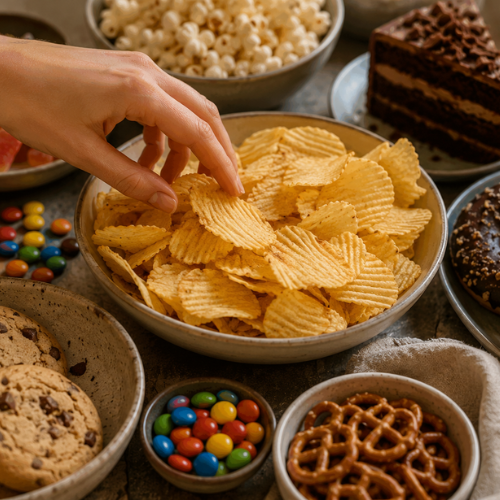
Have you ever found yourself standing in the kitchen at 3:00 p.m. suddenly needing chocolate… chips… something salty… or anything that sounds good right now?
It’s easy to think: “I have no willpower today.” Or maybe: “Why am I craving everything?”
But cravings often have much less to do with discipline and much more to do with what happened earlier in the day.
Skipping meals, eating too little protein, long gaps between eating, blood sugar dips, stress, or meals that don’t truly satisfy you can all create urgent signals for quick energy. Your body isn’t trying to sabotage you; it’s trying to help you.
When blood sugar swings up and down all day, your brain starts asking for fast fuel. That’s when intense cravings for sugar, salty snacks, bread, or carbs can suddenly feel impossible to ignore.
The good news? You don’t have to fight cravings with willpower.
Instead, you can build meals that naturally help your body feel nourished, steady, and satisfied so cravings become quieter in the background rather than something you’re constantly battling.
Here are 10 ways to create meals that support balanced energy and help calm cravings naturally:
1. Include protein at every meal
Protein is one of the most important nutrients for helping you stay full and balanced. It slows digestion, stabilizes blood sugar, and supports satiety hormones.
Aim for about 25–30 grams per meal when possible.
Good options include:
• Eggs
• Fish
• Chicken
• Greek yogurt
• Cottage cheese
• Lentils and beans
• Tofu
• Protein smoothies
Even something simple like starting your morning with a protein shake can create a noticeable difference in your energy throughout the day.
2. Don’t be afraid of healthy fats
Very low-fat meals often leave us searching for something else an hour later.
Healthy fats help create lasting satisfaction and slow digestion so you feel fuller longer.
Think:
• Avocado
• Olive oil
• Nuts
• Seeds
• Nut butter
• Fatty fish
A meal that tastes satisfying is usually a meal your body remembers.
3. Choose fiber-rich carbs
Carbs aren’t the enemy. The type of carbs matters.
Refined foods like white bread, sugary snacks, and heavily processed foods can create quick spikes and crashes in blood sugar.
Fiber-rich carbohydrates release energy more steadily and help support digestion too.
Try:
• Vegetables
• Fruit
• Beans and legumes
• Oats
• Whole grains
4. Eat consistently
Waiting too long between meals can create the perfect setup for cravings.
When blood sugar drops too low, your body wants quick energy—and fast.
Most people do well eating every 4–5 hours.
Consistency helps your body feel safe rather than constantly playing catch-up.
5. Make breakfast count
Breakfast can set the tone for your entire day.
If breakfast is skipped—or mostly quick carbs—you may find yourself hungry, shaky, or craving sugar later.
Try building breakfast around:
Protein + healthy fat + fiber
For example:
Greek yogurt + berries + nuts
Eggs + avocado + fruit
Protein smoothie + chia seeds
6. Add vegetables to at least two meals each day
Vegetables aren’t just about vitamins.
Their fiber and volume help support fullness and steady energy.
A plate with protein, carbs, and plenty of colorful vegetables often feels much more satisfying than protein and starch alone.
7. Stay hydrated
Sometimes thirst disguises itself as hunger.
If cravings appear suddenly, check in with your hydration first.
Keep water nearby throughout the day and consider electrolytes if plain water never seems to satisfy you.
8. Avoid long stretches without eating
Going many hours without food often leads to reaching the point of “I need food NOW.”
And when we’re there, balanced choices become much harder.
If lunch and dinner are far apart, consider a balanced snack like:
• Apple with almond butter
• Cottage cheese and berries
• Nuts and fruit
• Hummus with veggies
9. Focus on real foods most of the time
Packaged foods are often designed to keep us wanting more.
Whole foods tend to satisfy the body more completely.
Think less about perfection and more about building meals around foods that help you feel good.
10. Slow down while you eat
This one surprises people.
Eating while answering emails, scrolling social media, driving, or standing at the kitchen counter can make it harder for your brain to register satisfaction.
Even sitting for five minutes and taking a breath before eating can change how satisfied you feel afterward.
Cravings are not failures. They’re feedback.
Your body is always communicating with you. The more you learn to listen, the easier it becomes to nourish yourself in a way that feels supportive instead of restrictive.
I’d love to hear from you—which craving shows up most often for you: sweet, salty, crunchy, or carbs?
