

When you feel bloated, tired, moody, or stuck in cycles of cravings, changing your diet feels like the most direct solution. But here’s something I see all the time: people overhaul what they eat—and still don’t feel quite right.
They cut foods out, add supplements, try new plans… and yet something still feels off.
More often than not, it’s because the foundation underneath the diet hasn’t been addressed yet.
Before changing what’s on your plate, here are three things I recommend before changing your diet. These can make a huge difference. In fact, they often improve how you feel—even if you haven’t changed a single food yet:
1. Stabilize your daily stress input (even if life is still busy)
If your nervous system is constantly in “go mode,” your body has a harder time doing basic things like digesting food, regulating blood sugar, and signaling hunger and fullness.
That’s when you start to notice things like:
- Feeling tired after meals
- Craving sugar or snacks more often
- Bloating or digestive discomfort
- Light, restless sleep
The goal isn’t to eliminate stress (because let’s be real—that’s not happening). The goal is to interrupt it before it builds up.
Think of these as small “pressure valves” throughout your day:
- A 5-minute walk outside after lunch
- 10 slow breaths while your coffee brews
- Sitting in your car for a minute before going inside
- Letting hot water hit your shoulders in the shower while you relax your jaw
They’re simple, but they help your body shift out of constant urgency—so it stops reacting to everything, including food.
2. Look at how you’re eating, not just what you’re eating
Most people focus on ingredients, but overlook the environment they’re eating in. And that environment matters more than you might think.
Eating while:
- Standing at the counter
- Driving between errands
- Answering emails
- Watching something stressful
…keeps your body in a semi-alert state. And digestion doesn’t work well in that state.
Instead of trying to overhaul every meal, start small:
- Sit down for one meal a day without distractions
- Take a few slower bites at the beginning of your meal
- Occasionally put your fork down between bites
- Notice when you start to feel full instead of rushing past it
These aren’t rigid rules—they’re ways to help your body actually receive the food you’re already eating.
3. Create a simple “baseline plate” you can rely on
One of the biggest reasons diets don’t stick? They get too complicated, too fast.
New recipes, unfamiliar ingredients, long grocery lists—it becomes overwhelming. And the moment life gets busy, everything falls apart.
Instead, create a go-to meal structure you can fall back on anytime:
- A protein you enjoy and can make quickly
- A carbohydrate that feels good in your body
- A simple produce option
That might look like:
- Eggs, potatoes, and fruit
- Greek yogurt with berries, nuts, and seeds
- Chicken or salmon with rice and veggies
- Ground turkey tacos with avocado and tomatoes
This becomes your anchor.
Once that’s in place, you can adjust and refine based on your goals—but you’re not starting from scratch every time.
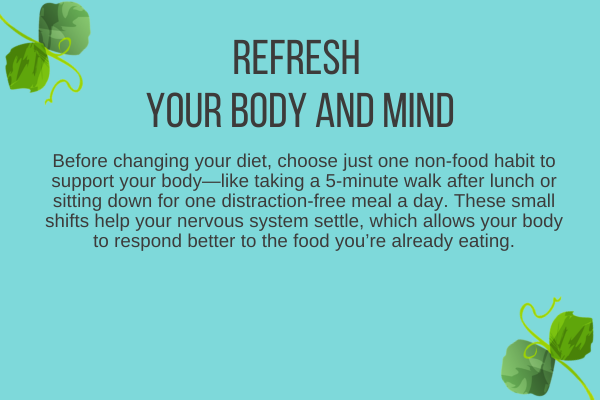
Sometimes the most powerful changes don’t start on your plate—they start in how supported your body feels.
When you’re more regulated, your meals feel calmer, and you have a simple structure to rely on…
Everything else gets easier.
Food starts to feel supportive again instead of confusing.
Your body becomes more responsive instead of reactive.
And your energy begins to feel more steady, not something you’re constantly chasing.
Start here and let me know how it goes.
