

Inflammation gets mentioned a lot these days — but the word can feel vague. We know it’s bad, we know we should address it, yet we’re not always sure what it actually looks like in the body or what to do about it in a practical, everyday way. Let me break it down.
Understanding the Difference
Inflammation itself isn’t the enemy. It’s a natural and necessary immune response — when you cut your finger or fight a virus, inflammation is your body doing its job. The issue is chronic, low-grade inflammation: when the process stays switched on even when there’s nothing to repair. Over time, that persistent activation affects how you feel daily.
Signs it might be at play: persistent fatigue that doesn’t improve with rest, achy or stiff joints (especially in the morning), ongoing digestive issues, skin flare-ups, brain fog, or frequent mood changes. For women over 40, hormonal shifts can also influence inflammatory pathways — which is one reason some notice more joint discomfort or digestive sensitivity during perimenopause.
What’s Driving It
Common contributors include a diet high in ultra-processed foods and refined sugar, chronic stress without adequate recovery, poor sleep, gut microbiome imbalances, and environmental exposures. These tend to compound each other — which is why addressing one area often creates positive ripples in others.
Your Most Powerful Tool: Your Fork
An anti-inflammatory approach to eating isn’t a specific plan — it’s a way of building meals that support your body’s natural balance. Focus more on:
- Colorful vegetables, especially dark leafy greens, beets, and broccoli
- Berries — blueberries, raspberries, and strawberries are high in antioxidants
- Fatty fish like salmon and sardines, rich in omega-3 fatty acids
- Extra virgin olive oil, turmeric, and ginger
- Nuts, seeds, and legumes for gut support
And reduce where you can: ultra-processed foods, refined sugar, industrial seed oils, and foods you personally react to. Food sensitivity testing can be a helpful tool if you’re not sure which foods may be contributing for you (if you need more info. on that, contact me).
Want Extra Anti-Inflammatory Support?
Shaklee’s OmegaGuard delivers ultra-pure, pharmaceutical-grade EPA and DHA — among the most well-researched nutrients for supporting a healthy inflammatory response. Rigorous purity testing, no fishy aftertaste, and a formula I personally trust for my clients focused on heart, joint, and overall health.
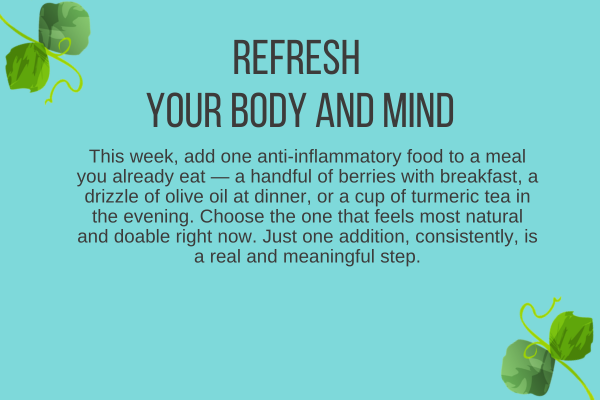
Reducing chronic inflammation isn’t an overnight shift — but the cumulative effect of small, consistent food choices is genuinely powerful. Your body is paying attention to everything you offer it, and it responds.
If you’d like a more personalized look at what might be driving inflammation for you, food sensitivity testing and nutrition coaching can help you get a clearer picture. Reach out anytime — I’d love to support you.
