

Drink more water. It’s some of the most common health advice out there — and it’s not wrong. But if you’ve ever felt headachy, foggy, or exhausted despite drinking plenty of water, you’ve probably sensed that something more is going on.
True hydration is about more than fluid volume. It’s about what your body does with that fluid — and that’s where things get more interesting.
What Hydration Actually Means
For water to hydrate your cells, it needs to get inside them — and that requires electrolytes. Sodium, potassium, magnesium, and chloride act as gatekeepers, helping water move across cell membranes and stay where the body needs it most. Without adequate electrolytes, water can pass right through you without meaningfully nourishing your cells. This is why someone can drink 8 glasses of water a day and still feel dehydrated.
It’s also why sweat matters more in summer than we often realize. When you perspire, you lose both water and electrolytes. Replacing only the water without replenishing the minerals is a bit like filling a leaky bucket — you’re putting fluid in, but not addressing the underlying imbalance.
Signs You May Not Be Adequately Hydrated
Dehydration doesn’t always announce itself with thirst. By the time you feel thirsty, you’re already mildly dehydrated. Other signals to watch for, especially in summer:
- Headaches that come on in the afternoon or after time outdoors
- Fatigue and low energy that feels disproportionate to your activity level
- Brain fog, difficulty concentrating, or feeling mentally slow
- Muscle cramps, particularly in the legs or feet
- Dry mouth, chapped lips, or dark yellow urine
- Feeling dizzy or lightheaded when you stand up quickly
Hormonal changes can affect fluid balance and increase susceptibility to dehydration — another reason this deserves more than a passing thought.
How to Hydrate More Effectively
A few practical shifts that go beyond just drinking more:
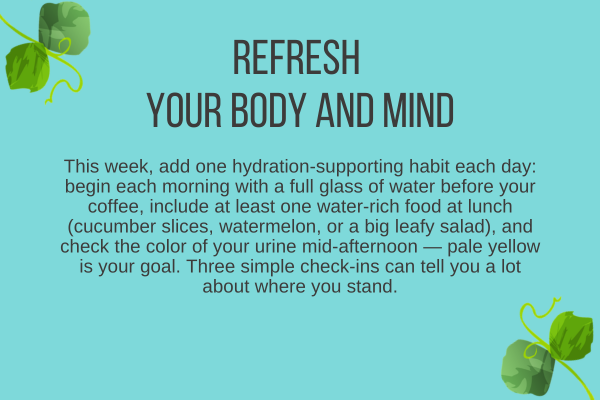
- Start your morning with water before coffee. Caffeine is a mild diuretic, so beginning the day hydrated sets a better foundation.
- Eat your water. Cucumbers, watermelon, strawberries, celery, and leafy greens all have high water content and natural minerals that support hydration.
- Add a pinch of mineral-rich salt (like sea salt or pink Himalayan) to your water, especially on hot days or after exercise. This gives the water something to work with.
- Sip consistently throughout the day rather than drinking large amounts at once. The body absorbs and uses fluid better in smaller, regular doses.
- Be mindful of alcohol and caffeine in summer — both increase fluid loss and can accelerate dehydration when the heat is already doing the same.
Looking for a Clean Way to Stay Hydrated All Summer?
Shaklee’s Hydrate is a naturally sweetened, electrolyte-replenishing drink mix with no artificial colors, flavors, or sweeteners. It’s designed to support real hydration — not just fluid volume — making it a smart choice on hot days, after exercise, or any time you need a little extra support.
Good hydration touches almost everything — your energy, your skin, your digestion, your mood, and your ability to handle heat. It’s one of the most foundational health habits, and yet most of us are slightly behind on it most of the time.
This summer, think of hydration as an active practice rather than a passive one. Your body will thank you for it. And if you’d like support building a nutrition routine that covers all your foundational bases, reach out — I’d love to help.
