

August is the sweet spot. Summer is winding down, kids and grandkids are heading back to school this month or next (and back to sharing every germ they encounter), and the seasonal shift toward cooler temperatures comes right after that. This is when the bugs that circulate in fall and winter get started.
The best time to support your immune system is before you need it. Not when you’re already knocked flat with a cold, racing to the vitamin aisle for emergency supplements. Now – when your body has the time and resources to build genuine resilience.
Your Immune System Is Not a Switch You Flip
One of the most common misconceptions about immunity is that you can “boost” it on demand, with a single supplement, a cleanse, or a week of eating well. The immune system doesn’t work that way. It’s a complex network of cells, tissues, and organs that responds to what you consistently give it over time.
What you do today, this week, and this month either builds the foundation for a resilient immune response, or quietly depletes it. The habits that matter most aren’t dramatic. They’re the everyday ones that most people know about but underestimate.
Food First: What Your Immune System Actually Runs On
The immune system is nutritionally demanding. It requires a steady supply of specific vitamins, minerals, and antioxidants to function well. The most important ones and where to find them:
- Vitamin C: found in bell peppers, citrus, strawberries, kiwi, and broccoli. A powerful antioxidant that supports the production and function of white blood cells.
- Vitamin D: the sun is the best source, but in late summer many people are already starting to lose ground. Fatty fish, egg yolks, and fortified foods help, but supplementation is often necessary in northern latitudes during fall and winter.
- Zinc: found in pumpkin seeds, legumes, nuts, and meat. Zinc is essential for the development of immune cells and is one of the most commonly depleted minerals during illness.
- Vitamin A: found in sweet potatoes, carrots, leafy greens, and eggs. Supports the integrity of mucous membranes — the body’s first line of physical defense against pathogens.
- Selenium: found in Brazil nuts (just one or two per day is enough), tuna, and sunflower seeds. Selenium supports the immune response and has antioxidant properties that protect immune cells from damage.
The pattern here is consistent: a wide variety of colorful, whole foods provides the broadest base of immune-supportive nutrients. No single food does it all.
The Gut Connection – Again
I know I keep saying this and it comes up in almost every conversation about health for good reason: approximately 70–80% of immune tissue lives in or around the gut. The health of your microbiome directly influences how well your immune system mounts a response, how quickly it resolves it, and how likely you are to experience chronic low-grade inflammation that leaves you more vulnerable over time.
Supporting immune health means supporting gut health. And that means fiber-rich foods, fermented foods, and where helpful, a quality probiotic. The two systems are deeply intertwined.
The Lifestyle Habits That Matter as Much as Food
Nutrition provides the raw materials. But the immune system also depends heavily on these:
- Sleep. During sleep, the body produces cytokines (proteins that coordinate the immune response). Consistently poor sleep measurably reduces immune competence. This is not optional support; it’s foundational.
- Stress management. Chronic stress suppresses immune function through sustained cortisol elevation. Even moderate daily stress, left unmanaged, creates ongoing immune vulnerability. Finding practices that genuinely lower your stress response, not just feel good in the moment, matters.
- Movement. Moderate, regular physical activity improves immune surveillance and reduces chronic inflammation. Overtraining has the opposite effect, which is one more reason that sustainable, consistent movement beats intense short bursts.
- Hydration. Mucous membranes (your body’s frontline physical defenses) depend on adequate hydration to function properly. Dry, cracked mucous membranes are literally easier for pathogens to penetrate.
Want Comprehensive Nutritional Support Going into Fall? Shaklee’s Vitalizer provides over 80 bio-optimized nutrients — including immune-critical vitamins C, D, and E, zinc, selenium, and B vitamins — in a clinically studied, time-release strip that ensures nutrients are delivered where and when the body needs them. It’s one of the most thorough foundational supplements I trust for year-round immune support. Another one of my favorites is Triple Defense Boost – a powerful and tasty immune drink that’s perfect if you’re constantly on the go.
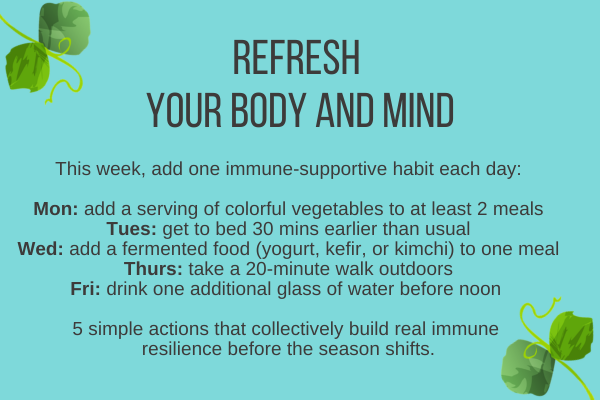
Immunity isn’t built in a day, and it isn’t lost in a day either. It’s the cumulative result of how you eat, sleep, move, and manage stress across weeks and months. The habits that protect you in November are the ones you build in August.
If you’d like a more personalized look at your nutritional gaps and what might be leaving your immune system under-resourced heading into fall, I’d love to help. Just reply to this email and we’ll schedule a few minutes to talk.
