

Bloating is one of those symptoms that’s easy to dismiss as minor. That is, until you’re three hours into a day where your waistband is cutting into you, you look six months pregnant after a meal you thought was perfectly healthy, and you genuinely can’t figure out why.
I hear about this constantly. And what I want to say first is: bloating is common, but it is not inevitable. It’s a signal – sometimes from the food you ate, sometimes from how you ate it, sometimes from something deeper going on with your gut or your hormones. Understanding which is which is what makes it possible to actually fix.
What Bloating Actually Is
Bloating happens when gas or fluid accumulates in the digestive tract, causing the abdomen to feel full, tight, or visibly distended. It can be accompanied by gurgling, cramping, pressure, or general digestive discomfort. Or it can just be that uncomfortable fullness with no other obvious symptoms.
The important thing to understand is that bloating is a symptom, not a diagnosis. It has many possible causes, and the right approach depends on which one (or which combination) is driving it for you.
The Most Common Causes
- Eating too quickly or while distracted. When you eat fast, you swallow significantly more air than when you eat slowly and mindfully. That air has to go somewhere, and it often becomes gas that sits around uncomfortably in your stomach or intestines. Distracted eating also impairs the digestive signals that help the stomach know how much has arrived and how to process it efficiently.
- Food sensitivities or intolerances. Lactose, gluten, FODMAPs (certain fermentable carbohydrates found in onions, garlic, apples, and many other foods), and specific food proteins can all trigger bloating in sensitive people. Unlike true food allergies, these reactions are dose-dependent and don’t involve the immune system, but they’re real, common, and highly individual. What bloats one person might not bother someone else.
- Gut microbiome imbalance. An overgrowth of certain bacterial strains, or a microbiome that’s low in diversity, produces excess gas during fermentation. That leads to bloating that seems to happen regardless of what you eat. You might also notice constipation and loose stools and that you respond well to probiotics.
- Constipation. When transit time slows and stool sits in your colon longer than it should, fermentation continues and gas accumulates. Bloating caused by constipation is often worse toward the end of the day and is accompanied by infrequent or incomplete bowel movements. Adequate fiber, hydration, and movement are the primary levers here.
- Hormonal fluctuations. This is the one that catches many women off guard. Estrogen and progesterone both influence gut motility and fluid retention. In the days before a period (and more unpredictably during perimenopause) hormonal shifts can cause the gut to slow down and the body to retain water in the abdominal area, producing bloating that isn’t related to food at all. Many women in perimenopause report that their bloating became more frequent and more pronounced as their cycles became irregular.
- Stress and the nervous system. The gut and the brain are in constant communication. When the nervous system is in a stress response, digestion slows, gut motility changes, and the gut becomes more sensitive to gas and pressure. Chronic stress is one of the most overlooked contributors to ongoing digestive discomfort, including bloating that seems to appear out of nowhere.
What Actually Helps
Because bloating has multiple causes, the most effective approach addresses more than one at a time:
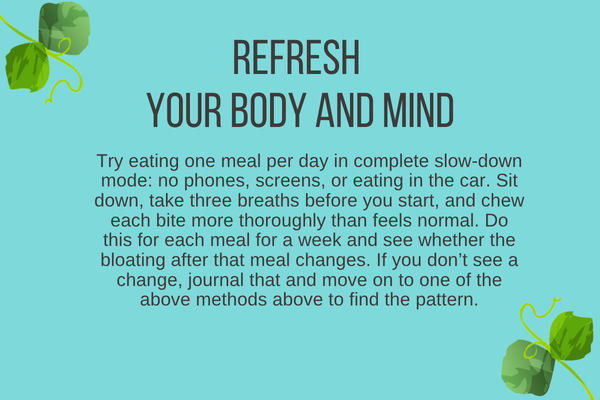
- Slow down at meals. Put the fork down between bites. Chew thoroughly, more thoroughly than feels necessary. Don’t eat while looking at your phone. These aren’t suggestions you haven’t heard before, but the reason they keep coming up is that they work. Digestion begins in the mouth, and giving it the time and attention it needs makes a measurable difference.
- Identify your personal triggers. A simple food and symptom journal noting what you ate, when you ate it, and when bloating appeared, can reveal patterns within a week or two. Common culprits include cruciferous vegetables in large amounts, raw onion and garlic, carbonated drinks, dairy, beans and legumes (especially when not well tolerated), and high-fructose foods. Food sensitivity testing can provide a more precise picture if journaling doesn’t clarify things.
- Support gut motility. Gentle movement after meals (a 10-minute walk), adequate daily fiber and hydration, and a consistent meal schedule all support the regular, efficient transit that prevents gas buildup. Magnesium glycinate at bedtime can be helpful for constipation-related bloating.
- Address the microbiome. Fermented foods like yogurt, kefir, and kimchi, a high-diversity plant-based diet, and where appropriate a quality probiotic can help rebalance gut bacteria and reduce the excessive fermentation that produces gas.
- Manage the stress piece. If bloating consistently worsens during stressful periods, that tells you something. A practice to regulate your nervous system, whether that’s walking, breathwork, yoga, or building in more is part of a long-term solution, not an optional add-on.
When to Look More Closely
Occasional bloating after a large meal or a particularly fibrous day is normal. Bloating that is frequent, severe, significantly affects quality of life, or is accompanied by blood in the stool, unexplained weight loss, or persistent pain deserves a conversation with your doctor to rule out conditions that require medical attention.
For most women, though, bloating that’s been present for a while without a clear diagnosis tends to have a nutritional and lifestyle root cause that responds well to the right support. You don’t have to just live with it.
Bloating is your body’s way of telling you that something in the digestive process isn’t working smoothly. Sometimes it’s a quick fix — eat more slowly, cut back on a specific food, drink more water. Sometimes it points to something that benefits from a closer, more personalized look.
If you’ve been struggling with bloating and haven’t been able to get to the bottom of it, I’d love to help. Food sensitivity testing, gut health support, and personalized nutrition coaching are all tools we can use together. Reach out anytime to schedule a discovery session.
