

Fiber has never been trendy, and it rarely makes headlines. But if there’s one nutrition topic that consistently surprises my clients when we dig into it, it’s this one. Most women are getting roughly half the fiber they need, and it touches almost every area of their health.
Fiber is not just about your bathroom habits. It’s about blood sugar, hormones, gut health, cardiovascular health, weight management, and even mood. Understanding what fiber actually does, and how to get more of it, is one of the highest-return nutrition investments you can make.
What Fiber Actually Does
Fiber is the indigestible portion of plant foods – the structural material that the human body can’t break down. And that’s precisely what makes it so valuable. As it moves through the digestive system, it performs several jobs:
- Slows digestion and stabilizes blood sugar. Soluble fiber dissolves in water and forms a gel-like substance in the gut that slows the absorption of glucose into the bloodstream. This smooths out blood sugar peaks and valleys which reduces cravings, extends satiety, and makes insulin regulation easier.
- Feeds the gut microbiome. Beneficial gut bacteria ferment fiber (specifically prebiotic fiber) and produce short-chain fatty acids as a byproduct. These compounds nourish the gut lining, reduce inflammation, support immune function, and even influence mood and brain chemistry. Without adequate fiber, beneficial bacterial strains literally starve.
- Supports estrogen clearance. Fiber in the digestive tract binds to used estrogen that has been processed by the liver and is ready to be excreted. Without enough fiber, some of that estrogen gets reabsorbed into circulation, contributing to hormonal imbalance, including symptoms like bloating, breast tenderness, and mood changes that many women attribute to perimenopause alone.
- Lowers cardiovascular risk. Soluble fiber (found especially in foods like oats, barley, legumes, and apples) binds to cholesterol in the digestive tract and removes it from the body before it can be absorbed. This is one of the most consistently researched and replicated benefits of a high-fiber diet.
- Supports healthy weight management. Fiber is filling without adding caloric density. High-fiber meals take longer to eat, slow gastric emptying, and sustain satiety longer – all of which naturally reduce overall intake without requiring calorie counting or restriction.
How Much Do You Actually Need?
The recommendation for women is at least 25 grams of fiber per day. The average American woman gets around 12–15 grams. Yep, our good ol’ American diet with our refined foods! The good news: closing that gap doesn’t require eating foods you don’t enjoy. It requires eating more of the plant foods most people already like, more consistently.
The Best Food Sources — Practical and Approachable
Rather than thinking in grams, think in categories to aim for daily:
- Legumes: the most fiber-dense foods available. One cup of black beans, lentils, or chickpeas provides 12–16 grams. Adding legumes to soups, salads, or as a side dish two to three times a week closes the fiber gap faster than almost anything else.
- Vegetables: especially cruciferous ones like broccoli, Brussels sprouts, and cabbage, and root vegetables like sweet potatoes and carrots. Aim for a large portion at lunch and dinner rather than a few forkfuls on the side.
- Fruit with the skin on: apples, pears, berries, and figs are particularly high in fiber. A medium apple with skin provides about 4–5 grams; a cup of raspberries provides 8 grams.
- Whole grains: oats, quinoa, farro, and brown rice all provide meaningful fiber. Oats in particular are high in beta-glucan, the soluble fiber most associated with cholesterol and blood sugar benefits.
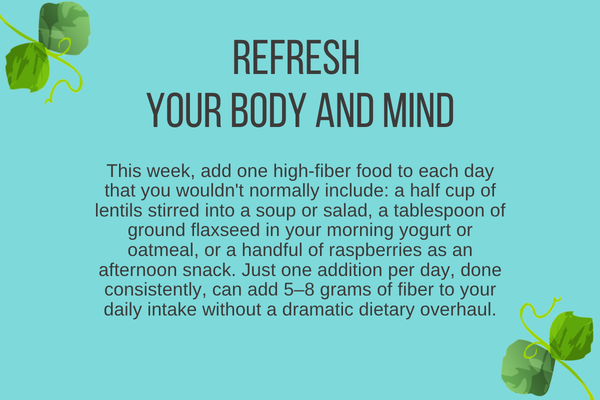
- Nuts and seeds: chia seeds, flaxseed, and almonds are especially high. A tablespoon of ground flaxseed adds 2–3 grams and can be stirred into yogurt, oatmeal, or a smoothie without changing the flavor.
Increasing Fiber Without the Uncomfortable Side Effects
One reason people hesitate around fiber is bloating and gas, which are real side effects of adding fiber too quickly. The gut bacteria that ferment fiber need time to adjust to a larger supply.
The key is to increase gradually. Add one serving of a high-fiber food per week rather than overhauling everything at once. And increase water intake alongside it. Fiber without adequate hydration can worsen constipation rather than improving it. Slow and steady is genuinely the right approach here.
Want to Support Your Gut as You Increase Fiber?
Shaklee Optiflora DI Probiotic can help the digestive system adapt more comfortably as you increase fiber intake — replenishing beneficial bacteria that ferment fiber and produce the compounds that nourish your gut lining. Its triple-layer encapsulation is designed to survive stomach acid and deliver live cultures where they’re needed most.
Getting enough fiber isn’t complicated. It just requires consistency and a diet anchored around real, whole plant foods. The benefits extend far beyond digestion, touching hormonal balance, cardiovascular health, blood sugar stability, and gut health in ways that accumulate powerfully over time.
If you’d like support building a way of eating that’s both genuinely nourishing and actually enjoyable to maintain, I’d love to help. Reach out anytime to schedule a discovery session.
