

Most women don’t lack energy because they’re lazy or out of shape. They lack energy because of how they’re fueling (or not fueling) throughout the day. The timing, composition, and consistency of what you eat has a more direct effect on how you feel hour by hour than almost any other lifestyle factor.
Eating for energy is a skill. And like most skills, it gets easier once you understand a few principles you can apply without tracking every bite or following a complicated plan.
The Foundation: Blood Sugar Is Everything
Sustainable energy starts with stable blood sugar. When glucose in the bloodstream rises and falls sharply (which happens when meals are skipped, carbohydrate-heavy, or low in protein and fat), energy follows the same curve: a brief lift followed by a crash that sends you reaching for caffeine or sugar.
The goal isn’t to eliminate carbohydrates. The goal is to pair them strategically so that glucose enters the bloodstream gradually rather than all at once. Protein and fat slow that absorption. Fiber slows it further. A meal built around all three produces a flatter, more sustained energy curve than one built around carbohydrates alone.
Morning: Set the Tone Before Anything Else
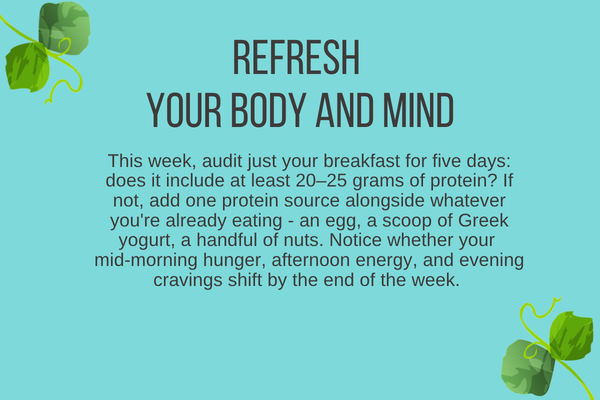
What you eat in the first hour or two after waking sets the metabolic tone for the entire day. A protein-rich breakfast stabilizes blood sugar from the start and significantly reduces cravings and energy dips later. Skipping breakfast, or eating a carbohydrate-only one, starts a blood sugar rollercoaster that is hard to get off once it’s in motion.
Aim for at least 25 grams of protein at breakfast. Eggs in any form, Greek yogurt with nuts and berries, cottage cheese, or a well-formulated protein smoothie all work. The specifics matter less than the protein anchor being present.
Midday: Don’t Let More Than Five Hours Pass
A gap of more than four to five hours between meals triggers a gradual blood sugar decline that becomes more disruptive with each passing hour. By the time most people reach lunch after a light or skipped breakfast, they’re already making decisions from a depleted state.
• Lunch should be your most intentional meal. It sets the trajectory for the afternoon, when energy most commonly dips. A lunch anchored in protein and vegetables (with a moderate portion of complex carbohydrates) tends to produce the most stable afternoon energy.
• If a long gap between breakfast and lunch is unavoidable, a small bridge snack like a handful of nuts, a hard-boiled egg, or a few bites of cottage cheese, keeps blood sugar from falling far enough to trigger a crash before lunch even arrives.
Afternoon: Work With the Dip, Not Against It
A slight energy lull between 1 and 3pm is a normal physiological pattern which is partly a post-meal digestive shift, partly a natural circadian rhythm dip. It doesn’t have to derail the afternoon.
• A short walk after lunch stabilizes post-meal blood sugar more effectively than sitting through the lull
• If a snack is genuinely needed, make it protein-forward rather than a quick carbohydrate that will spike and drop again within the hour
• Limit caffeine after 2pm because the afternoon coffee that feels necessary may be creating tomorrow’s fatigue
Evening: Wind Down Without Crashing
A light or skipped lunch often leads to overeating at dinner, followed by a blood sugar spike and crash that disrupts sleep and starts the whole cycle again.
Dinner doesn’t need to be large to be nourishing. A moderate plate of protein, plenty of vegetables, and a small portion of complex carbohydrates eaten at a consistent timesupports both evening stability and a smoother transition into sleep. Eating within two to three hours of bed tends to work against sleep quality for most people.
Habits That Quietly Drain Energy
• Chronic mild dehydration – even slight fluid deficit measurably reduces energy and concentration
• Too much caffeine replacing food rather than supplementing it
• Erratic meal timing – eating at wildly different times keeps the body’s internal rhythm disoriented
• High sugar intake in “healthy” forms like juice, sweetened yogurt, or granola bars
Consistent, stable energy isn’t something you either have or don’t – it’s built through the accumulated effect of how you nourish yourself day after day. No single food or supplement replaces the foundation of eating well at regular intervals.
If you’d like help mapping out a way of eating genuinely tailored to your energy patterns and your lifestyle, I’d love to work with you. A discovery session is always a great place to start — reach out anytime.
