
If you’ve ever stood in your kitchen thinking, “What am I even going to make tonight?”—you’re not alone.
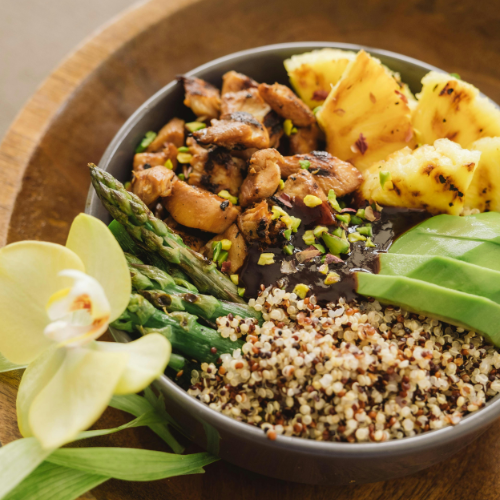
This is exactly why I love building meals in bowls. They’re simple, flexible, and once you get the hang of it, they almost make themselves.
What I’ve found is that bowls take the pressure off. You don’t need a recipe. You don’t need to overthink it. You just need a simple structure – and then you can switch things up based on what’s in your fridge, what’s in season, or honestly… what you’re in the mood for.
Here’s the basic formula I come back to again and again:
Base + Protein + Vegetables + Sauce + Toppings
Once you know this, everything gets easier.
1. Start with a Base That Feels Good to You
The base is what grounds your meal—it gives it substance and something for all the flavors to land on.
Sometimes you’ll want something light:
• Mixed greens
• Arugula or spinach
• Chilled quinoa or farro
• Zucchini noodles or cauliflower rice
Other times (especially in colder months), your body might crave something more filling:
• Brown rice
• Quinoa or farro
• Roasted sweet potatoes
I often batch-cook a grain at the beginning of the week so I’m not starting from scratch every time. It makes pulling a meal together feel almost effortless.
2. Add Protein to Keep You Steady
This is what turns your bowl from a snack into something that actually satisfies you. In warmer months, I tend to keep things lighter and quicker:
• Grilled chicken
• Shrimp
• Canned or poached salmon
• Tofu or beans
In cooler months, I lean into heartier options:
• Roasted chicken
• Slow-cooked beef or pork
• Baked salmon
• Lentils or chickpeas with warming spices
And honestly? Having a few shortcuts on hand—like rotisserie chicken or canned beans—can be a lifesaver on busy days.
3. Fill It Up with Vegetables (This Is Where the Magic Happens)
Vegetables bring color, texture, and a lot of the nutrients that help you feel your best.
In spring and summer, I love adding things like:
• Cucumbers
• Cherry tomatoes
• Radishes
• Snap peas
• Corn or zucchini
In fall and winter, I switch to:
• Roasted Brussels sprouts
• Butternut squash
• Carrots
• Broccoli or cauliflower
You can mix raw and cooked depending on what feels good that day. There’s no “right” ratio—just aim for variety.
4. Don’t Skip the Sauce (This Changes Everything)
If you’ve ever made a bowl and thought, “This is kind of boring,”—it was probably missing a good sauce.
The sauce is what brings everything together.
Lighter, fresh options:
• Lemon vinaigrette
• Salsa verde
• Cilantro lime dressing
• Olive oil + citrus
Richer, more comforting options:
• Tahini dressing
• Peanut sauce
• Miso ginger
• Olive oil + balsamic
Same bowl, different sauce = completely different meal.
5. Add Toppings for Texture and Flavor
This is the finishing touch—and honestly, the part that makes it feel like a real meal instead of just “food in a bowl.”
Some of my go-tos:
• Nuts or seeds
• Fresh herbs
• Crumbled cheese
• Pickled veggies
Seasonally, you can have fun with it:
• Fresh peas or tomatoes in summer
• Pomegranate seeds or pumpkin seeds in fall/winter
These little extras make a big difference.
Why This Works So Well
What I love most about this approach is that it’s simple without being boring.
You’re not starting from scratch every night.
You’re not following rigid rules.
You’re just building meals in a way that supports your energy, your schedule, and your preferences.
And over time, it becomes second nature.
I’d love to hear about your favorite bowls!
