

Setting boundaries isn’t just about relationships—it’s about health.
When your time, energy, and attention are constantly stretched, your nervous system pays the price. You may notice it showing up as fatigue, irritability, poor sleep, digestive issues, or that underlying sense of always being “on.”
Many people don’t struggle with boundaries because they don’t care. They struggle because they do care—and they don’t want to disappoint, upset, or be misunderstood. But without clear limits, your body remains in a subtle state of stress, and over time, that takes a toll.
Boundaries aren’t about pushing people away. They’re about creating the conditions your body needs to feel safe, steady, and supported.
Here are seven ways to set boundaries in a way that supports your health—without feeling harsh or disconnected:
1. Start with a grounded, regulated tone
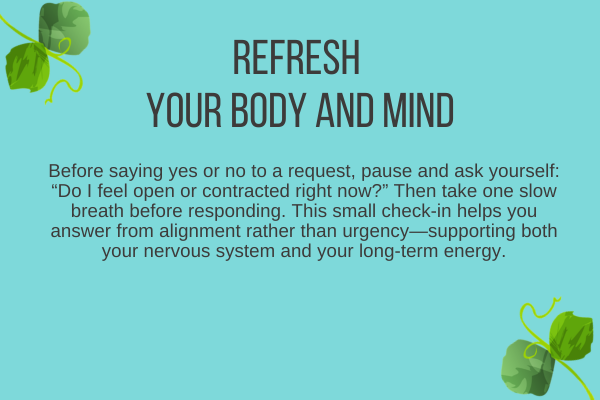
Before responding, take a breath and notice your body. When you speak from a calmer state, your words land differently—for both you and the other person.
A simple opening like, “I want to be honest about what I can handle right now,” helps your nervous system stay steady while also keeping the conversation connected.
2. Protect your energy by being clear first
Long explanations can keep your body in a state of tension. Clear, direct language helps reduce mental load and prevents drawn-out conversations that drain your energy.
“I’m not available this weekend” gives your system closure in a way that over-explaining often doesn’t.
3. Use language that reflects capacity, not guilt
When boundaries come from a place of capacity (“I don’t have the bandwidth”), your body experiences less internal conflict than when they come from guilt or obligation.
This shift helps reduce stress hormones and supports a more regulated response.
4. Offer connection when it feels supportive—not required
If you want to maintain connection, offering an alternative can feel nourishing rather than draining.
But the key is that it’s genuine. Your body can tell the difference between a true offer and one made out of pressure.
5. Keep it simple to reduce internal stress
The longer and more complicated your response, the more your body stays activated.
Short, clear statements like “I’m going to pass” or “I can’t commit to that right now” help conserve energy and support nervous system regulation.
6. Separate empathy from overextension
You can understand someone’s feelings without taking them on as your responsibility.
When you hold this line, you reduce emotional overload—which supports not only your mental health, but also your physical wellbeing.
7. Repetition builds resilience
Every time you calmly restate a boundary, you teach your nervous system that it’s safe to hold your ground.
This builds internal stability over time, making it easier to respond rather than react.
The Health Perspective
Boundaries are one of the most overlooked tools for supporting:
- Nervous system regulation
- Hormonal balance
- Digestive health
- Energy and recovery
When your body no longer feels pulled in multiple directions, it can shift out of survival mode and into a state where healing and balance are possible.
I’d love to hear—what’s one boundary you can set this week that would support your energy and wellbeing?
Sometimes the smallest shift creates the biggest sense of relief, and your body will thank you for it.
