

Meal planning often conjures images of color-coded spreadsheets, identical lunches lined up in glass containers, and an entire Sunday sacrificed to the kitchen. No wonder so many people try it once and abandon it.
But the version of meal planning that actually works looks nothing like that. It’s flexible, takes 30-60 mins a week, and isn’t about cooking everything in advance – it’s about thinking ahead just enough so you’re never caught hungry with no good options.
Here’s how to build an approach that fits your real life, not some wellness influencer’s version of it:
Start with a Framework, Not a Full Menu
The most common meal planning mistake is trying to map out every single meal before the week begins. By Wednesday, life has intervened, the plan is already off, and the whole thing gets abandoned.
A more sustainable approach: plan by category rather than specific dish. Instead of “grilled salmon with roasted asparagus on Tuesday,” think “protein + vegetable + grain on Tuesday.” This gives you a structure to work within while leaving room for what’s actually in the fridge, what you’re in the mood for, and whatever the week throws at you.
A simple weekly framework might look like:
• 2–3 dinners that require real cooking (choose ones with leftovers built in)
• 1–2 easy default dinners that require minimal thought (eggs, a good salad, a simple soup)
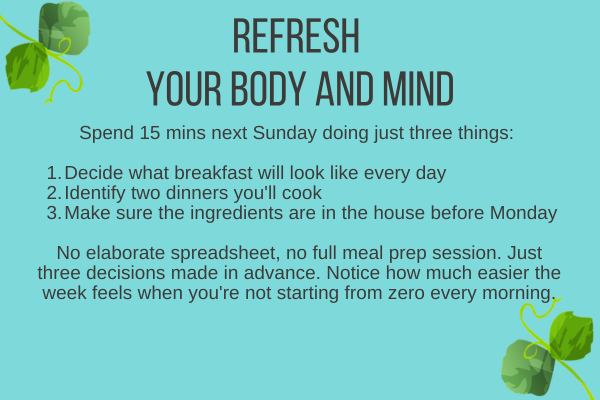
• Breakfasts anchored around protein – decided in advance so mornings don’t require decisions
• Lunches that use dinner leftovers or a few prepped staples
• One to two snack options decided ahead of time and stocked in the fridge
Prep Ingredients, Not Meals
Full meal prep (cooking complete dishes in advance) works for some people but overwhelms others. A more sustainable middle ground is ingredient prep: preparing the building blocks rather than the finished product.
Spending 30–45 minutes on the weekend washing and chopping vegetables, cooking a big batch of grains, hard-boiling a few eggs, and portioning out nuts or snacks means that assembling meals during the week takes minutes rather than requiring a full cooking session. You haven’t decided what you’re making – you’ve just made all the options easier to reach for.
The “Anchor Meal” Approach
If meal planning still feels like too much, start with just one anchor meal per day. Decide in advance what breakfast will look like (and only breakfast) for the week. A protein-forward breakfast that you rotate between two or three options removes one of the most cognitively demanding decisions of the day and sets your blood sugar on a stable path from the very first meal.
Once the breakfast anchor feels automatic, add lunch. Then dinner. Building one meal at a time is not a shortcut – it’s the sustainable path.
Keep a “Go-To” List
Every effective meal planner has a short mental or written list of meals they can make reliably, quickly, and with minimal planning. These are your fallbacks, the meals that show up when the week gets busy or the elaborate plan falls through.
Your go-to list should be:
• Short (8–12 meals maximum)
• Genuinely meals you enjoy, not just “healthy” options you feel obligated to eat
• Quick enough to make on a weeknight without much thought
• Flexible enough that you usually have the ingredients on hand
When life disrupts the plan (and it will!), you reach for the go-to list rather than the takeout menu. That list is the real backbone of consistent healthy eating.
Plan for the Gaps
Even the best meal plan has gaps – the rushed morning, the meeting that runs through lunch, the evening where cooking just isn’t happening. Planning for those moments in advance is what separates people who eat well most of the time from people who eat well only when conditions are perfect.
Have a default for each gap: a grab-and-go breakfast option for rushed mornings, a reliable lunch spot near work or home where you can make a decent choice, an easy dinner that takes under 15 minutes. They’re the part of the plan that factors in imperfection.
The best meal plan is the one you actually follow – imperfectly, flexibly, and most of the time. It doesn’t require culinary skill, hours in the kitchen, or a perfectly stocked pantry. It requires a small amount of intentional thinking, done regularly, before hunger makes the decisions for you.
If you’d like help building a meal approach that’s genuinely tailored to your nutritional needs, your schedule, and your goals, I’d love to work with you – this is one of my favorite things to do with clients. Reach out anytime.
