
The holiday season is officially here. And if you’ve been trying to eat well, move your body, or just feel good in your skin, you might already be bracing yourself.
Here’s what I want you to hear: You don’t have to choose between enjoying yourself and taking care of your health during November and December. That’s a false choice, and it’s one that sets a lot of people up for an all-or-nothing spiral.
What actually works is showing up with a few simple anchors, staying flexible, and giving yourself genuine permission to enjoy the season.
Reframe What ‘Healthy’ Means Right Now
This time of year, healthy doesn’t mean perfect. It means consistent in the ways that matter most.
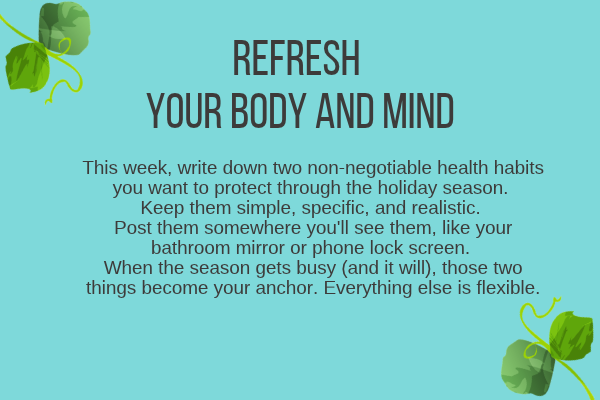
Instead of trying to eat clean 100% of the time or maintain your exact summer workout schedule, aim to protect your non-negotiables. Maybe that’s getting enough sleep. Maybe it’s eating a real breakfast before you head out for the holiday parties. Maybe it’s adding a 20-minute walk three times a week to get in some extra cardio.
Small anchors prevent big drifts. When you hold onto a few core habits, a cookie at a party doesn’t turn into a six-week tailspin.
The Four Habits Worth Keeping
You don’t need a long list. These four habits make a difference during high-temptation months:
• Eat protein at breakfast. It stabilizes your blood sugar and reduces cravings later in the day, especially before events where food is everywhere.
• Don’t skip meals before parties. Going in ravenous is a recipe for overeating foods you didn’t even really want.
• Keep moving, even lightly. A 15-minute walk counts. You’re maintaining the habit, not training for a race.
• Stay hydrated. It’s easy to confuse thirst with hunger, and holiday drinks don’t count as water.
Navigating the Holiday Table
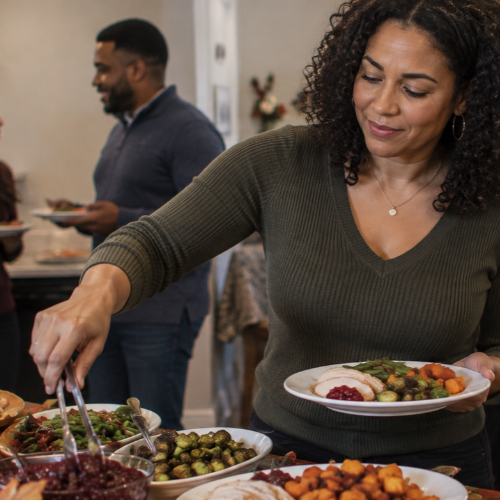
Here’s something that might surprise you: the food at holiday gatherings is usually not the problem. The problem is the mental chatter around it.
When you tell yourself certain foods are “off-limits,” you give them enormous power. When you eat them anyway (which most people do), guilt kicks in and the whole day can feel ruined.
A better approach: take a look at what’s on the table first. Decide what you actually want versus what’s just there. Fill half your plate with vegetables and protein, then choose one or two things that genuinely look delicious to you. Eat them slowly. Enjoy them. Move on.
You’re not “being bad.” You’re making a choice, which is what adults with healthy relationships to food do.
What to Say When People Push Food on You
“Come on, it’s the holidays!” “Just one bite won’t hurt!” “I made this especially for you.”
Social pressure around food is real, and it can be hard to navigate without feeling awkward or rude.
A few phrases that work:
• “It looks amazing. I’m just taking a little break.”
• “I’ve already had so much good stuff tonight, I’m saving room.”
• “I’ll try it a little later.”
You don’t owe anyone an explanation about what you’re eating or not eating. A warm smile and a redirect usually work better than a lengthy justification.
The Morning After
Maybe you had more than you planned. Maybe the dessert table got the better of you, or you skipped your workout all week.
The most important thing you can do the next morning is not punish yourself. Don’t skip meals and don’t give up with a vow to start over on January 1st.
Just go back to your anchors. Drink a glass of water. Eat a real breakfast. Take a walk. Your body is remarkably good at rebalancing when you give it the chance.
One day, one party, even one full week of indulging doesn’t erase months of good habits. What erases it is giving up.
The holidays are meant to be enjoyed. Food, family, laughter, tradition: all of it matters. Your health habits aren’t there to keep you from celebrating. They’re there so you can celebrate fully, without dragging yourself into January feeling depleted.
A few good choices, made consistently, will carry you through. You’ve got this.
