

Have you ever had a gut feeling? Or noticed that anxiety shows up as butterflies in your stomach? That’s not just a metaphor – it’s your gut and brain in direct communication with each other.
The relationship between your digestive system and your emotional wellbeing is one of the most exciting and validated areas of nutrition science right now. And once you understand it, the phrase “food affects how you feel” takes on a whole new meaning.
Your Gut Is a Second Brain
The gut and the brain are connected by a vast communication network called the gut-brain axis. This includes the vagus nerve (a major neural highway that runs between your gut and your brain) as well as immune signaling, hormonal pathways, and the activity of your gut microbiome.
Here’s a number that often surprises people: up to 95% of your body’s serotonin (the neurotransmitter most associated with mood, calm, and emotional wellbeing) is produced in your gut, not your brain. Your gut microbiome helps regulate this process.
So when the health of your gut is compromised, the downstream effect on your mood is real and measurable.
What Disrupts the Gut-Brain Connection
Several everyday factors can disrupt the balance of the gut microbiome and, by extension, affect mood and emotions:
• A diet high in ultra-processed foods and refined sugar, which feeds less beneficial bacterial strains.
• Chronic stress, which alters gut motility, increases intestinal permeability, and shifts the microbial balance.
• Antibiotic use without subsequent microbiome support.
• Poor sleep, which directly affects the composition of gut bacteria.
• Low fiber intake as the microbiome feeds on fiber, and without enough of it, beneficial strains decline.
For women in midlife, hormonal fluctuations add another layer. Estrogen influences gut motility and the diversity of the microbiome. As estrogen shifts during perimenopause, some women notice changes in both their digestion and their mood, and those two experiences are very much connected.
Foods That Support a Healthy Gut-Mood Connection
The most powerful thing you can do is feed your gut microbiome well.
That means prioritizing:
• Fiber-rich plant foods: vegetables, legumes, whole grains, and fruit. Aim for variety – different plants feed different beneficial bacterial strains.
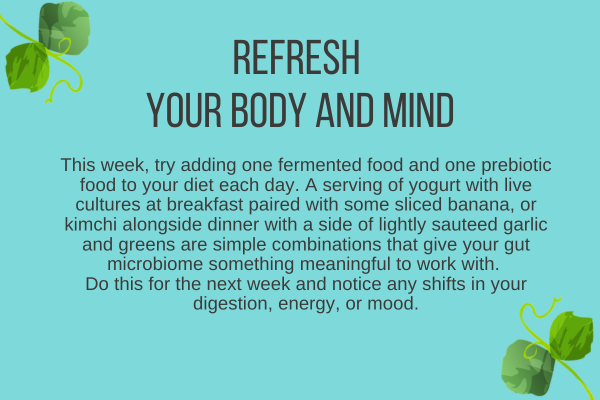
• Fermented foods: yogurt with live cultures, kefir, kimchi, sauerkraut, and miso all introduce beneficial bacteria to the gut.
• Prebiotic foods: garlic, onions, leeks, asparagus, and bananas feed the beneficial bacteria already present.
• Omega-3 fatty acids: found in fatty fish, walnuts, and flaxseed – these support the gut lining and have well-documented effects on mood and brain health.
Equally important: reducing the ultra-processed foods, excess sugar, and alcohol that deplete the microbiome and contribute to the inflammation that disrupts the gut-brain conversation.
This isn’t about replacing professional support with a bowl of yogurt. It’s about recognizing that the way you nourish your body has a real, biological impact on your emotional experience – and that the two are impossible to fully separate.
Supporting your gut is one of the most whole-person things you can do for your health. If you’d like to explore what this looks like in a personalized plan, I’m here for that conversation. Reach out anytime!
