

We spend a lot of time and money on what we put on our skin. Serums, creams, SPF, retinols…the skincare industry is enormous, and many of those products genuinely help. But some of the most meaningful changes in how skin looks and feels after 40 can’t be addressed from the outside in.
Your skin is a reflection of what’s happening inside your body. It’s the largest organ you have, and it’s one of the last to receive nutrients when the body is deciding where to direct resources. Which means that when something is off nutritionally, hormonally, or digestively, the skin is often where it shows up first.
Learning to read those signals, and knowing what to do about them from a nutrition standpoint, is one of the most empowering things you can do for both your skin and your overall health.
Why Skin Changes After 40
Before looking at specific signals, it helps to understand what’s actually shifting. After 40, several things happen simultaneously that affect skin health:
- Collagen production declines. Collagen is the structural protein that keeps skin firm and elastic. The body produces less of it with each passing year and the decline accelerates significantly around menopause. This is the primary driver of the increased fine lines, sagging, and loss of volume that many women notice in this decade.
- Estrogen levels fall. Estrogen stimulates both collagen production and the skin’s natural oil production. As it declines, skin often becomes drier, thinner, and more prone to irritation, even in women who never had dry skin before.
- Cellular turnover slows. Younger skin renews itself roughly every 28 days. By the mid-40s, that cycle can stretch to 45 days or more, which is part of why skin can look dull or uneven even when it’s clean and moisturized.
- Chronic inflammation accumulates. Years of dietary choices, stress, poor sleep, and environmental exposure can leave a low-grade inflammatory state in the body that shows up visibly in the skin as redness, uneven tone, sensitivity, or accelerated aging.
Skin Signals Worth Paying Attention To
Your skin speaks a specific language. Here’s a translation of some of the most common messages:
- Persistent dryness or flakiness: especially if it’s new and doesn’t respond to moisturizer can signal deficiencies in omega-3 fatty acids, vitamin A, or zinc. These nutrients support the skin’s lipid barrier, which is what keeps moisture in and irritants out.
- Dull, tired-looking skin: often reflects dehydration, sluggish circulation, or a diet low in antioxidants. The skin needs both water and a steady supply of vitamins C and E to maintain its natural radiance.
- Breakouts along the jawline or chin in adult women: this pattern is almost always hormonal. It’s commonly associated with fluctuating estrogen and progesterone, elevated androgens, or blood sugar instability, all of which can be influenced meaningfully by diet.
- Redness, rosacea, or increased skin sensitivity: frequently linked to gut health. When the gut microbiome is out of balance or intestinal permeability is compromised (what’s sometimes called “leaky gut”), inflammatory signals reach the skin and manifest as flushing, sensitivity, or reactive redness.
- Loss of firmness or accelerated wrinkling: beyond the expected hormonal changes, this can be accelerated by chronic high sugar intake. Sugar molecules attach to collagen fibers in a process called glycation, making them stiff and brittle — literally aging the skin faster than hormonal changes alone would.
The Foods That Feed Healthy Skin
Skincare starts at the end of your fork. The nutrients that most directly support how skin looks and ages:
- Vitamin C – essential for collagen synthesis. The body cannot make collagen without it. Found in bell peppers, citrus, kiwi, strawberries, and broccoli. This is also a powerful antioxidant that protects skin cells from oxidative damage.
- Omega-3 fatty acids – support the skin’s lipid barrier, reduce inflammation, and help maintain moisture. Found in fatty fish, walnuts, chia seeds, and flaxseed. Chronically low omega-3 intake is one of the most common nutritional roots of dry, inflamed skin.
- Zinc – involved in skin cell production, wound healing, and regulating oil production. Found in pumpkin seeds, legumes, beef, and cashews. Zinc deficiency is associated with increased acne, slow healing, and skin inflammation.
- Vitamin A – supports cellular turnover and the integrity of skin tissue. Found in sweet potatoes, carrots, eggs, and leafy greens. Retinol (the topical form) gets most of the attention, but dietary vitamin A works from the inside out.
- Antioxidant-rich foods broadly – blueberries, dark chocolate, green tea, and colorful vegetables all help neutralize the free radicals that accelerate skin aging. Variety matters here; different antioxidants protect different aspects of skin health.
What to Pull Back On
Just as important as what you add is what you reduce. The biggest dietary drivers of accelerated skin aging:
- Refined sugar and high-glycemic foods – glycation (the process by which sugar damages collagen) is one of the most direct nutritional accelerants of skin aging. This doesn’t mean never eating sugar; it means being aware that consistent high sugar intake shows up on your face over time.
- Alcohol – dehydrates the skin, dilates blood vessels (contributing to redness and broken capillaries), depletes B vitamins and zinc, and disrupts sleep — all of which affect skin health and appearance.
- Ultra-processed foods – high in industrial seed oils, refined carbohydrates, and additives that promote systemic inflammation, which the skin reflects visibly.
The Gut-Skin Axis
If you’ve read my earlier post on the gut-mood connection, this won’t surprise you: the gut and skin are deeply linked through what researchers call the gut-skin axis. The state of your microbiome influences systemic inflammation, immune regulation, and nutrient absorption – all of which show up in your skin.
Women who address gut health through a fiber-rich diet, fermented foods, and reduced processed food intake frequently report visible improvements in their skin such as reduced redness, clearer complexion, and better moisture retention, alongside improvements in digestion and mood. The systems are not separate.
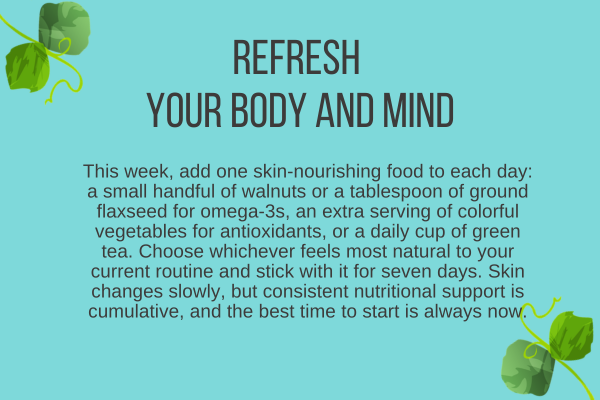
The skincare products you use matter. Anyone that knows me, knows that I swear by Shaklee’s amazing skincare products. But so does the food on your plate, the water in your glass, the quality of your sleep, and the health of your gut.
Beautiful, resilient skin at every age is built from both directions – and the inside investment is one the outside work can’t replace.
If you’d like to take a closer look at what your skin might be signaling about your overall health, and build a nutrition approach that supports you from the inside out, I’d love to work with you.
