
Bone health is one of those topics that doesn’t get much attention until something goes wrong – a fracture, a diagnosis of osteopenia, a conversation with a doctor that catches you off guard. By that point, a lot of bone density has already been lost, and the work of rebuilding is much harder than the work of preserving.
We might have heard of someone who took a fall and their health quickly deteriorated. And we don’t think that could possibly be us at some point in the future.
Here’s what I want you to know: bone loss is not inevitable. It’s not simply what happens as we age. It’s a process that responds significantly to how you eat, how you move, and the lifestyle choices you make right now.
October is a good time to think about this. The shift away from summer sunlight is already reducing your body’s vitamin D production, and if you’re in perimenopause or post-menopause, the hormonal changes that accelerate bone loss are well underway.
The conversation matters now.
Why Bone Loss Accelerates After 40
Bone is living tissue. It’s constantly being broken down and rebuilt in a process called remodeling. When we’re younger, the rebuilding keeps pace with the breakdown. Estrogen plays a central role in this balance: it slows the cells that break down bone (osteoclasts) and supports the cells that build it (osteoblasts).
For women, as estrogen declines in perimenopause and menopause, that protective effect weakens. We can lose up to 20% of our bone density in the five to seven years around menopause which is a window that makes the perimenopausal years one of the most critical times to support bone health intentionally.
Bone loss after this point doesn’t stop, but it does slow, meaning the habits you build now have a real and lasting impact on where your bone density stabilizes.
What Bones Actually Need, Beyond Calcium
Calcium gets most of the attention when it comes to bone health. We all grew up with “Got Milk?” but it’s far from the whole picture. Bones are complex living structures that require a team of nutrients working together:
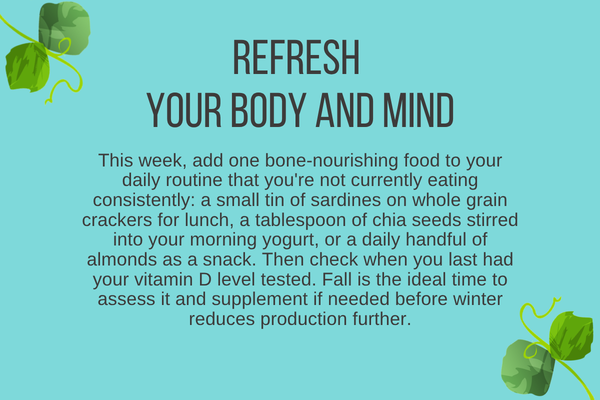
- Calcium: the primary mineral in bone. Women over 50 need around 1,200 mg per day. Good food sources include dairy, sardines and canned salmon with bones, leafy greens (especially kale and bok choy), almonds, and fortified plant milks. Supplements can help fill gaps, but food sources are better absorbed and don’t carry the cardiovascular concerns associated with high-dose calcium supplements.
- Vitamin D: essential for calcium absorption. Without adequate vitamin D, the body absorbs only a fraction of the calcium you consume. As sun exposure decreases in fall and winter, vitamin D levels often drop below optimal and most people’s dietary intake alone doesn’t compensate. Getting your levels tested and supplementing appropriately through the cooler months is one of the most practical things you can do for bone health.
- Magnesium: around 60% of the body’s magnesium is stored in bone. It supports the activity of both osteoblasts and osteoclasts and plays a role in vitamin D metabolism. Found in pumpkin seeds, leafy greens, almonds, and legumes.
- Vitamin K2: directs calcium into the bones and away from the arteries where it can cause harm. Found in fermented foods (especially natto, a Japanese fermented soybean), hard cheeses, and egg yolks. K2 is one of the most underappreciated bone-health nutrients and one that many people are genuinely deficient in.
- Protein: bone is roughly one-third protein by composition. Adequate protein intake supports the collagen matrix that gives bone its flexibility and fracture resistance. Protein isn’t just about building muscle.
What Actively Harms Bone Health
Building bone is only part of the equation. A few things that accelerate bone loss:
- Chronic high sodium intake: excess sodium causes the kidneys to excrete more calcium in urine. Reducing processed food intake (the primary source of sodium in most diets) is a solid bone-protective step.
- Excessive caffeine: very high caffeine intake (more than 4 cups of coffee daily) is associated with reduced calcium absorption. Moderate consumption is generally fine, but it’s worth keeping in mind if calcium intake is already low.
- Alcohol: heavy alcohol use directly impairs bone remodeling and is associated with significantly increased fracture risk. Moderate, occasional intake is a very different picture from regular heavy drinking.
- A sedentary lifestyle: bones respond to mechanical stress. Weight-bearing movement tells the body to maintain and build bone density. Without that signal, bone loss accelerates regardless of how well you eat.
- Chronic low calorie intake: long-term restrictive eating deprives bones of the nutrients and hormonal signals they need to maintain density. This is one of the downstream costs of years of yo-yo dieting that often doesn’t show up until later in life.
Movement Is Medicine for Your Bones
No nutrition conversation about bone health is complete without movement. Weight-bearing exercise like walking, hiking, dancing, strength training is the most powerful stimulus for bone formation available. When bone experiences mechanical load, it responds by increasing density. Strength training in particular is one of the most effective interventions for maintaining bone density in post-menopausal women.
Even 30 minutes of brisk walking three to four times per week creates meaningful bone-protective stimulus. Combined with two sessions of resistance training, the effect is significantly greater.
Strong bones in your 60s, 70s, and beyond can be built in your 40s and 50s. The choices you make right now – what you eat, how you move, what you prioritize – are directly shaping the structural resilience you’ll have for decades to come.
This isn’t about fear. It’s about recognizing that you have real agency here, and that the window for the most impactful action is open right now. If you’d like a personalized look at your nutritional gaps and a plan that supports your bone health alongside your other goals, I’d love to help. Reach out anytime.
